
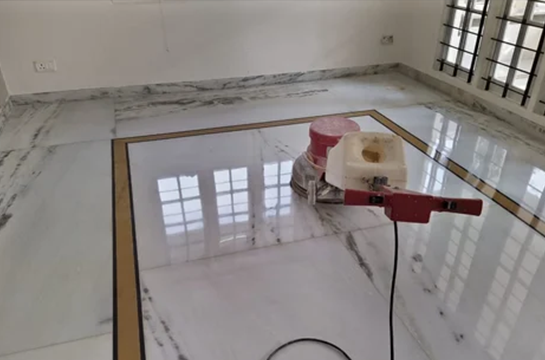
Have you ever walked into a room and instantly felt something was off with the marble floor? It’s sleek shiny, and screams luxury, but only when done right. Marble floor polishing can either make or break the look of your space. But how can you tell if the job wasn’t up to snuff? Here’s a rundown of the telltale signs of a botched marble floor polishing job that might save your floors—and your socks from sliding on uneven surfaces!
Dull Patches Everywhere
A good marble polish should appear uniformly glossy and provide a luxurious, mirror-like reflection across its whole surface. The moment you find dull and uneven patches, it means to you that the polishing job wasn’t done right, possibly because the polish was applied too thinly in certain areas or the technician rushed through the buffing stage. All these can make your floor appear patchy and poorly maintained. If you notice dull spots under different types of lighting, it’s time to question the quality of the polish job.
Scratches and Scuffs
Scratches and scuffs after a marble polish? That’s like getting a brand-new car with dents on it! Scratches often result from poor equipment handling or harsh abrasives on the marble surface. If your floors are only going to be polished, worn out, and scratched, then most likely the wrong tools were used, or he was careless. Smoothing minor imperfections is what polishing does; it should not create new ones. The marks it may leave behind can mar the beauty of marble and cause further damage in the passage of time.
Cloudy or Hazy Appearance
No one would want to have a cloudy or hazy floor after a polish, as this keeps the marble from giving you that natural beauty it has. This haziness usually comes from residues that are not removed due to poor cleaning of the compounds or excessive water used during polishing. The work was poorly done. Such haziness blocks the characteristic shine of the marble and makes it look neglected instead of polished. It is more obvious in direct sunlight, where the lack of clarity becomes very evident.
Texturing
A water-clear glasslike finish over the entire floor is characteristic of a well-polished marble floor. There is probably uneven working with the polishing machine, and experienced workers know to apply equal pressure and movements for a consistent finish. Such an uneven texture may be rough in some areas and silky in others. It is a sign that the polish job was not done with much care or skill. Not only does it mar the beauty of the floor, but it also may cut short its life expectancy.
Discoloration and Staining
Something has been done wrong if a polished marble floor discolors or stains. Incorrect chemicals, too harsh of chemicals, improper sealing, or leaving compounds on too long can cause this problem since the chemicals strip the marble of its natural color or permanently alter it. It is especially disappointing when your marble features great, beautiful veining but is now marred by stains. Discoloration also results from poor maintenance between polishing stages when oils or acids are accidentally introduced.
Visible Grinding Marks
If you are seeing grinding marks or lines after a marble polish, then a bad job is what has been done. Visible marks usually translate to a technician using too rough abrasives for your marble’s finish. It is not grinding and polishing to enhance the face; these abrasives leave grooves that mar the look of your floors. Professional technicians work progressively from coarse abrasives to fine abrasives to have a polish without visible grinding lines. Heavy grinding marks on the floor suggest the technician skipped certain steps or applied the wrong techniques.
Lack of Uniformity
Uniformity applies to any polished marble floor. If one part of the floor is shinier or smoother than all the others, it would totally and significantly ruin the whole look of the space. This is because the technician did not apply consistent pressure or polish distribution across the area. It can even look spotty and unprofessional, where various places catch your eye incorrectly. You are paying for marble polish, which means you would expect a uniform, high-gloss finish across the floor.
Conclusion
Polishing marble floors is more than just a quick buff—it’s a careful process that requires skill, precision, and patience. If your marble floor shows any of these signs, it might be time to call in a professional who knows how to treat marble with the respect it deserves. Your floors should shine with elegance not show signs of sloppy work! Remember, investing in quality polishing can make all the difference in preserving the beauty and longevity of your marble.